Buying a Used RV – Pro Tips before You Buy
Sometimes a used RV can be a great buy. Used RVs have already suffered the brunt of depreciation, many are only lightly used for a good price, and you will more than likely have an affordable monthly payment. But on the other hand, a used RV could be a disaster if you don't know what to look for.
Here are a few important checks to make prior to purchasing a used RV:
Water Damage Inspection

Number one on my list is to check the RV thoroughly for water damage. Water damage is quite common on used RVs. The leading cause is seams and sealants that flex and move until there is a small crack or opening that water can penetrate. If the previous owner did not inspect and reseal the seams and sealants, chances are there is some water damage.
Exterior Warning Signs

Water damage can be difficult to detect. All of the seams and sealants on the RV roof and sidewalls need to be inspected. Indicators of leaks on the exterior include soft spots on the roof, cracked or separated sealants, and soft spots or bubbles on the exterior sidewall. This happens when water gets behind the fiberglass causing it to delaminate (separate) from the backing. Anywhere the manufacturer cut an opening in the roof or sidewalls is prone to water leaks.
Interior Warning Signs

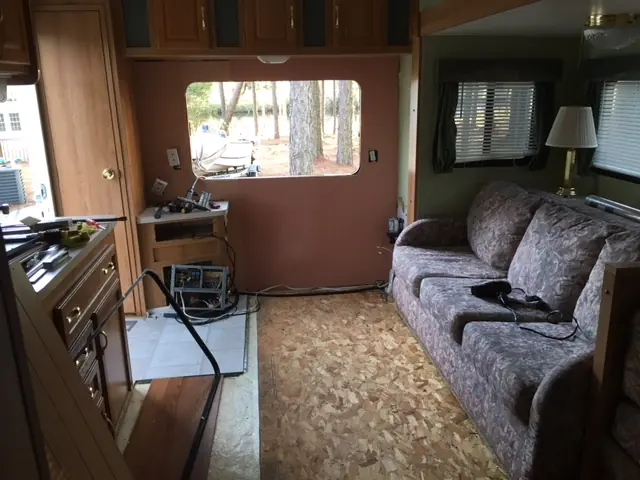
On the interior, you can detect water damage by signs of staining or discoloration, soft spots around windows, slide-outs, inside cabinets and on the floor. Water damage is expensive to repair, especially if it has time to spread. We recommend avoiding buying a used RV that has water damage.
Video: How to Inspect Your RV for Water Damage
Systems & Appliances Check

This check includes the water system, LP gas system, electrical system, and every appliance in the RV. If you are buying from an RV dealer and they say the RV will go through a pre-delivery inspection (PDI), ask what items are included and request to know what they find wrong.
If you are buying from a private owner, any inspections will be on you. If you are not comfortable performing these inspections, hire a qualified RV inspector. Remember, there is no warranty on a private sale, and replacing almost any appliance in the RV can cost $1,000 or more.
Drive-Line & Mechanical Inspection

Motorized RVs with an engine, transmission, and rear axle need to be inspected too. Thoroughly inspect the underside of the motorhome for any indications of leaks. If you discover any leaks, repairs should be made prior to purchasing the RV.
Fluids, Belts & Test Drive

Check the condition of belts, radiator hoses, and heater hoses. Check all fluid levels to make sure they are topped off and the fluid is clean. Ask the owner for maintenance records. You must drive the RV before you buy it — check the engine, transmission, brakes, windshield wipers, A/C, heat, and all dash controls.
Tires & Safety

Don't forget the tires. It's not uncommon for RV tires that look okay to be very old. If the RV you are considering is 8 years old, chances are the tires are too. Tires that are six years old or older should be inspected by a tire professional.
Weather Cracking

If there is visual evidence of weather cracking or checking caused by exposure to the elements, the tires likely need to be replaced. This can be expensive, especially on a motorhome. If the tires need replacing, negotiate with the owner about lowering the price.
Size, Fit & Towing Capacity

Make sure the used RV meets your specific needs. Is it large enough or small enough? Do you like the floor-plan arrangement? Is there adequate storage inside and outside? Are there enough sleeping arrangements? Are the holding tanks large enough for the way you plan to use the RV?
Tow Vehicle Compatibility

If it is a travel trailer or 5th wheel, do you have a vehicle that can safely tow it? Buying another tow vehicle can be expensive. Check all trailer weights and make sure your tow vehicle is rated to safely tow it before you purchase. Use our Tow Guide tool to check compatibility.
Negotiating the Price
If everything checks out, it's time to discuss price. Some RV owners owe more on the RV than it's worth — this is called being "upside-down." For example, if the RV is worth $10,000 but the owner still owes $12,000, they are $2,000 upside-down. Do not overpay for a used RV.
Using the NADA Guide

There is an RV edition of the National Automobile Dealers Association (NADA) guide. This is the appraisal guide most RV dealers use to determine used RV prices and values. The online NADA guide offers low retail and average retail pricing. Prices in the guide assume everything works and the RV is in good condition.
Try negotiating the price closer to the low retail price in the NADA guide. If the RV needs new tires or other repairs, ask the seller to make repairs or lower the selling price. If everything works properly and you can get the price somewhere between low and average retail, it's probably a fair deal for both parties.
📝 About the Author & Content Rights
Written by Mark J. Polk, founder of RV 101® and RV Education 101®. Mark is a nationally recognized RV expert, author, and educator with decades of experience in the RV industry.
© RV Education 101®. All rights reserved. This article and all images are the intellectual property of Mark J. Polk and RV Education 101®. Content is shared here with attribution and links back to the original source.
Original article: Buying a Used RV – RV 101 Pro Tips before You Buy | Training courses: RV Online Training
Ready to Find Your Perfect Used RV?
Browse our inspected pre-owned inventory or schedule a walkthrough with our team.
Shop Used RVs Schedule InspectionReady to Start Your RV Adventure?
Browse our inventory or give us a call!