
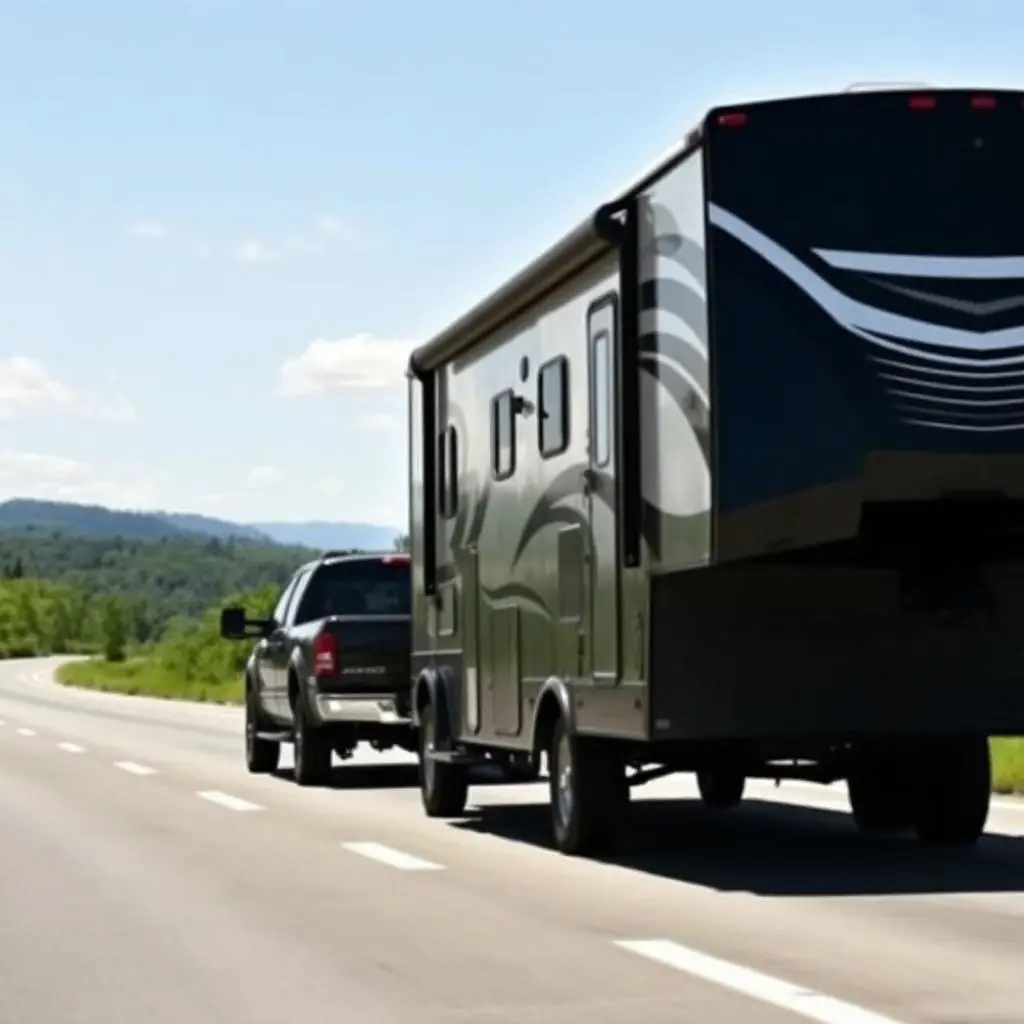
The Definitive North Carolina RV Towing Guide: Weights, Laws, and Safety
As the sun rises over the Outer Banks or sets behind the haze of the Blue Ridge Mountains, the call to explore North Carolina in an RV is undeniable. It’s a dream of freedom, of campfires and coastline, of memories waiting to be made. But before you hitch up and head out from Wilmington, there's a crucial foundation to lay: understanding the language of weights, measures, and the laws of the road. Getting this right isn't just about compliance; it's about ensuring the safety of your family and everyone you share the highway with. At Rex & Sons RVs, we believe an educated RVer is a happy and safe RVer, and this guide is your first step toward confident towing.
Understanding RV Weights: The Language of the Road
Before you can safely tow any RV, you need to understand the key terms that define its weight characteristics. These numbers aren't suggestions; they are critical safety ratings determined by engineers. Let's break down the most important ones, using real examples from our inventory.
Key RV Weight Terminology
- Unloaded Vehicle Weight (UVW) or Dry Weight: This is the weight of the RV as it leaves the factory. It doesn't include propane, water, batteries, or any of your personal gear. For instance, the ultra-light 2026 Rockwood GEO Pro G17LE weighs in at a nimble 2,654 lbs, making it accessible to a wide range of tow vehicles. On the other end of the spectrum, a large family bunkhouse like the 2026 Puma 32BHQS has a dry weight of 9,072 lbs, requiring a much more substantial tow vehicle.
- Gross Vehicle Weight Rating (GVWR): This is the absolute maximum weight the RV can be when fully loaded. It includes the UVW plus all your cargo, water, propane, and accessories. You must never exceed the GVWR.
- Hitch Weight or Tongue Weight: This is the downward force that the trailer tongue exerts on the hitch of your tow vehicle. For travel trailers, it should be 10-15% of the total loaded trailer weight for stable, safe towing. The popular 2026 Rockwood Mini Lite 2608BS has a dry weight of 6,830 lbs and a hitch weight of 945 lbs, putting it at a stable 13.8%.
- Cargo Carrying Capacity (CCC): This is the total weight of all the items you can add to your RV. It’s calculated by subtracting the UVW from the GVWR. This includes everything from water (which weighs about 8.34 lbs per gallon) to food, clothes, and camping gear.
The Water Weight Factor
Don't underestimate the weight of water! A travel trailer like the popular Rockwood Mini Lite 2515S has a 54-gallon fresh water tank. If you travel with it full, you're adding approximately 450 pounds (54 gal x 8.34 lbs/gal) to your total weight before you even pack a single suitcase. This weight counts against your RV's Cargo Carrying Capacity and your tow vehicle's total towing limit.
Key North Carolina Towing Laws You Need to Know
Navigating North Carolina's towing regulations is straightforward once you know the basics. While these rules are subject to change, and you should always verify with the NCDOT, here are the key points every RVer in the Tar Heel State should know.
Disclaimer: This information is for educational purposes. Please consult the North Carolina Department of Transportation (NCDOT) for the latest official regulations.
Brakes, Size, and Speed
- Trailer Brakes: In North Carolina, any trailer with a gross weight of 4,000 lbs or more is required to have its own braking system. Virtually every new travel trailer we sell at Rex & Sons RVs, from the compact Rockwood GEO Pro series to the largest Puma bunkhouses, comes standard with electric brakes and a breakaway switch.
- Speed Limits: When towing, you must adhere to the posted speed limits. While NC allows speeds up to 70 mph on some interstates, safe towing practice dictates a slower speed, typically 60-65 mph, to maintain control and reduce sway.
- Dimensions: The maximum width for an RV is typically 8.5 feet (102 inches), and the maximum height is 13.5 feet. The total length of your tow vehicle and trailer combination is generally limited to 60 feet. Most conventional travel trailer setups easily fall within these limits.
- Safety Equipment: Safety chains are required for all travel trailers. They must be crossed under the tongue to form a "cradle" that could catch the hitch if it were to detach from the tow vehicle.
The roads of North Carolina, from the Outer Banks to the Blue Ridge Mountains, are waiting. Understanding how to travel them safely is the first step toward unforgettable adventures.
Do You Need a Special Driver's License?
This is one of the most common questions we hear. For recreational purposes, a special license is not typically required in North Carolina. However, the rules can get specific with very large rigs. A Commercial Driver's License (CDL) may be required if the Gross Vehicle Weight Rating (GVWR) of your single vehicle (like a large motorhome) exceeds 26,001 lbs, or if the combined GVWR of your truck and trailer exceeds 26,001 lbs and the trailer's GVWR is over 10,000 lbs. While most of our travel trailers fall under this threshold, it's something to be aware of if you're considering a very large unit like a destination trailer or a heavy-duty toy hauler.
Matching Your RV to Your Tow Vehicle
The perfect RV for you isn’t just about the floorplan—it’s about finding a model that your current vehicle can handle safely. The two most critical numbers on your tow vehicle are its Towing Capacity and its Payload Capacity.
- Towing Capacity: The maximum trailer weight your vehicle can pull.
- Payload Capacity: The maximum weight your vehicle can carry in its cab and bed. This includes the trailer's hitch weight, all passengers, pets, and any cargo in the truck.
The Payload Puzzle
Many new RVers focus only on Towing Capacity, but Payload Capacity is often the more limiting factor. If your truck has a payload capacity of 1,500 lbs, and your trailer has a hitch weight of 900 lbs, you only have 600 lbs left for you, your family, and all your gear in the truck before you exceed your vehicle's safe operating limits. Always check the sticker on the driver's side door jamb for your specific vehicle's payload capacity.
To help you visualize this, here’s a comparison of a few models you might find on our lot at Rex & Sons RVs:
RV Weight Comparison Table
| Model | Dry Weight (UVW) | Hitch Weight | Length | Likely Tow Vehicle Class |
|---|---|---|---|---|
| 2026 Rockwood GEO Pro G17LE | 2,654 lbs | 305 lbs | 20' | Mid-Size SUV / Small Truck |
| 2022 Rockwood Mini Lite 2109S | 4,171 lbs | 525 lbs | 22' 4" | Large SUV / Half-Ton Truck |
| 2026 Rockwood Mini Lite 2515S | 6,050 lbs | 790 lbs | 25' 11" | Half-Ton Truck (e.g., F-150, Ram 1500) |
| 2026 Puma 32BHFS | 9,608 lbs | 1,175 lbs | 38' 9" | Heavy-Duty Truck (e.g., F-250, Ram 2500) |
| 2026 Puma Vista 420LFT | 13,024 lbs | 1,890 lbs | 42' 10" | Heavy-Duty Truck / Professional Delivery |
Ignoring your tow vehicle's payload capacity is one of the most common and dangerous mistakes new RVers make. It’s not just about what you can pull, but what you can carry.
FAQ: North Carolina Towing & RV Weights
What is the most important RV weight to know?
While all weights are important, the Gross Vehicle Weight Rating (GVWR) is arguably the most critical. It’s the legal and safe maximum your RV can weigh when fully loaded. Weighing your fully packed RV at a CAT scale before your first trip is the best way to ensure you are under your GVWR.
Do I need a special license to tow a fifth wheel in NC?
Generally, no. As long as you are using it for recreational purposes and your truck and trailer combination falls under the 26,001 lbs GVWR limits described earlier, a standard driver's license is sufficient.
Are weight distribution hitches required in North Carolina?
While not explicitly mandated by law, a weight distribution hitch (WDH) with sway control is considered essential safety equipment for towing almost any travel trailer. It distributes the trailer's tongue weight across the axles of both the tow vehicle and the trailer, leading to a more level, stable, and-safe ride. Our parts department can help you find the right WDH for your setup.
What happens if I get in an accident and I'm overweight?
Being over your vehicle's or RV's weight ratings can have serious consequences. In the event of an accident, it can lead to denied insurance claims and potential legal liability, as it demonstrates you were operating the vehicle in an unsafe manner.
Can the team at Rex & Sons RVs help me figure this out?
Absolutely. Our experienced team is trained to help you match your vehicle to the right RV. We can review your vehicle's towing specifications and guide you toward models that are a safe and comfortable fit, ensuring your new adventure starts on the right foot.
Your Adventure Awaits
The journey to becoming a confident RV owner starts with knowledge. By understanding the critical relationship between your tow vehicle and your trailer, you're not just following the rules—you're investing in peace of mind. The beauty of North Carolina is best enjoyed when you know you've done your homework and your entire rig is safe and sound. When you're ready to explore the possibilities, our team at Rex & Sons RVs is here to help you navigate the numbers and find the perfect RV for your next chapter.