CHAPTER 1 — Understanding Your RV Buying Journey: How to Move from Curiosity to Confidence
Navigating the RV buying journey requires breaking down a complex purchasing process into clear, structured steps so you can make decisions with complete clarity. Chapter 1 of the 2027 Ultimate RV Buyer’s Guide outlines the five fundamental phases every prospective buyer experiences when transitioning from casual interest to ownership.
Whether you are considering a compact travel trailer for weekend getaways along coastal North Carolina or a luxury motorhome for full-time cross-country travel, understanding where you are in the buying framework prevents overwhelm and ensures you select the perfect recreational vehicle for your lifestyle.

The Five Phases of the RV Buying Journey
Buying an RV is an exciting adventure, but rushing through the decision-making process often leads to buyer's remorse or purchasing a rig that does not fit your practical needs. By following these five structured phases, you maintain control over your timeline, budget, and final vehicle selection.
Phase 1: Curiosity & Inspiration
The journey always starts with a spark of interest—a desire to explore national parks, spend quality weekends at the beach, or travel in comfort. During this initial discovery phase, focus on defining your goals rather than shopping for specific models immediately.
- Identify Your Travel Style: Determine whether you plan to stay in full-hookup RV resorts, remote boondocking sites, or state park campgrounds with limited utility connections.
- Define Your Crew: Determine who will be traveling with you regularly, including family members, pets, or occasional guests, as this directly dictates bed counts and floor plan needs.
- Gather Visual Ideas: Explore online galleries, RV shows, and lifestyle content to discover which layouts appeal to your personal tastes.
Phase 2: Research & Reality Check
In Phase 2, initial inspiration meets real-world requirements. This critical stage involves technical research, financial boundary setting, and vehicle compatibility checks.
- Assess Towing Capabilities: If you plan to pull a travel trailer, travel trailer toy hauler, or fifth wheel, check your vehicle’s Gross Vehicle Weight Rating (GVWR) and payload capacity. Never rely solely on max towing capacity figures.
- Establish a Realistic Budget: Factor in insurance, registration, storage fees, maintenance, and hitch equipment alongside the purchase price.
- Compare RV Categories: Weigh the pros and cons of motorized units (Class A, Class C) versus towables (Travel Trailers, Fifth Wheels, Destination Trailers).
Phase 3: Shopping & Evaluation
Armed with realistic technical limits and budget parameters, you move into actively evaluating specific RVs. This is where hands-on experience becomes vital.
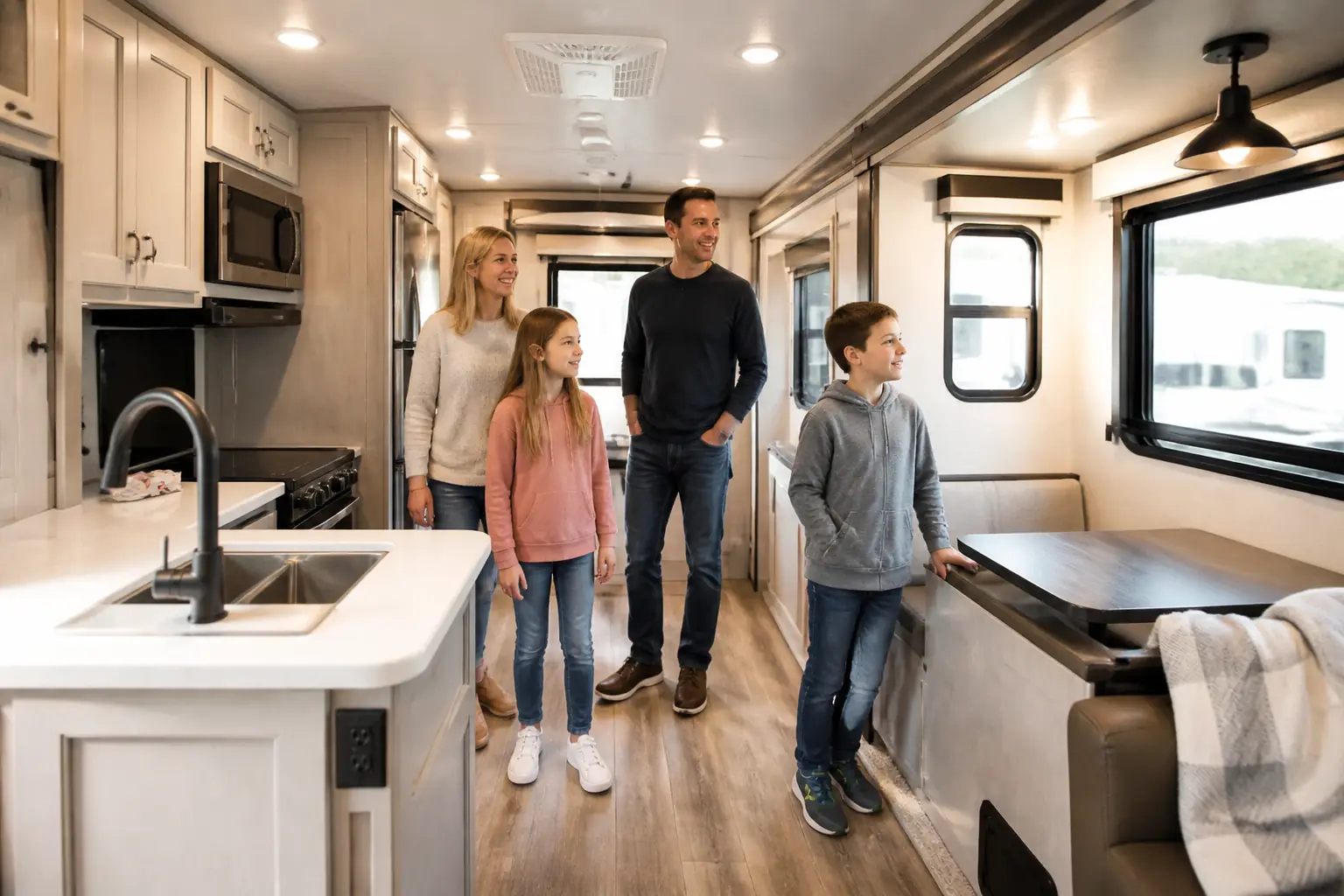
- In-Person Walkthroughs: Stand inside potential units, test seating comfort, imagine preparing meals in the galley, and check bathroom headroom.
- Evaluate Floor Plans: Pay close attention to living space traffic flow, storage capacity, slide-out placement, and tank capacities.
- Ask Dealership Specialists Questions: Inquire about build quality, frame construction, thermal insulation ratings, and warranty coverage for each brand under consideration, such as Forest River, East to West, Palomino, InTech RV, or Winnebago.
Phase 4: Purchase & Financing
Once you locate the ideal layout and model, you move into contract negotiations and financing structures. A seamless purchase experience relies on transparency and clear communication.
- Explore Financing Options: Compare terms, interest rates, and down payment requirements specifically designed for recreational vehicles.
- Evaluate Trade-Ins: If upgrading from a previous RV or vehicle, secure a professional trade appraisal to apply toward your purchase.
- Review Protection Plans: Consider extended service contracts and roadside assistance packages that safeguard your investment long down the highway.
Phase 5: Orientation & Onboarding
The final phase bridges the gap between buying the RV and taking your first trip. Proper onboarding equips you with the technical skills needed to operate your RV safely.
- Complete a Walkthrough Demonstration: Participate in a comprehensive, system-by-system orientation with a trained technician to learn water heater operation, electrical management, slide-out mechanisms, and waste tank dumping.
- Stock Essential Gear: Acquire core setup accessories including drinking water hoses, pressure regulators, surge protectors, leveling blocks, and sewer lines.
- Schedule a Maiden Voyage: Plan an initial local weekend trip close to home or your trusted dealership to practice setting up camp and operating systems in a stress-free environment.
Comparing the RV Buying Journey Phases
| Phase Name | Key Focus | Primary Objectives | Key Deliverable |
|---|---|---|---|
| Phase 1: Curiosity | Inspiration & Goals | Define camping style, traveler count, and usage goals | RV Lifestyle Wishlist |
| Phase 2: Research | Technical & Budget Limits | Calculate tow limits, establish budget, choose RV type | Vehicle & Budget Parameters |
| Phase 3: Evaluation | Model & Layout Selection | Tour RVs in person, evaluate build quality, compare layouts | Shortlist of Target RVs |
| Phase 4: Purchase | Financing & Contracts | Finalize trade value, secure financing, review warranties | Executed Agreement |
| Phase 5: Orientation | Education & Maiden Voyage | Complete walkthrough training, gather gear, take first trip | Confident RV Ownership |
Frequently Asked Questions
How long does the average RV buying journey take?
The RV buying journey typically takes anywhere from a few weeks to several months depending on your research phase and vehicle availability. Taking the time to properly evaluate tow ratings and floor plans during Phases 2 and 3 ensures long-term satisfaction.
Why is Phase 2 (Research & Reality Check) so critical?
Phase 2 prevents costly mistakes by identifying safety and technical limitations upfront, such as matching your vehicle's payload capacity to the fully loaded hitch weight of a potential trailer.
Should I tour RVs in person during Phase 1 or wait until Phase 3?
While online research is great for Phase 1 curiosity, visiting a local dealership early can help you understand spatial dimensions. However, saving detailed evaluation and dealer quotes for Phase 3 helps keep your search structured and efficient.
Ready to take the next step in your RV buying journey? The experienced team at Rex & Sons RVs in Castle Hayne, NC has been helping families throughout Wilmington and coastal North Carolina travel with confidence since 1997. Call our Sales department at (910) 793-2894 or explore our new and used RV inventory today to find the perfect layout for your family's next adventure!