RV Maintenance Tips: The Complete Checklist for Coastal NC RVers
Proper RV maintenance is the single best way to protect your financial investment and ensure your family vacations are safe, comfortable, and stress-free. In coastal North Carolina, unique environmental factors like high humidity, intense summer heat, and damp salt air demand a proactive approach to caring for your travel trailer, fifth wheel, or motorhome.
This comprehensive guide breaks down essential RV maintenance tips for coastal RVers, including roof inspection routines, battery care, seasonal protection, and a simple maintenance schedule to keep your rig road-ready year-round.

1. Roof Seals and Lap Sealant Inspection
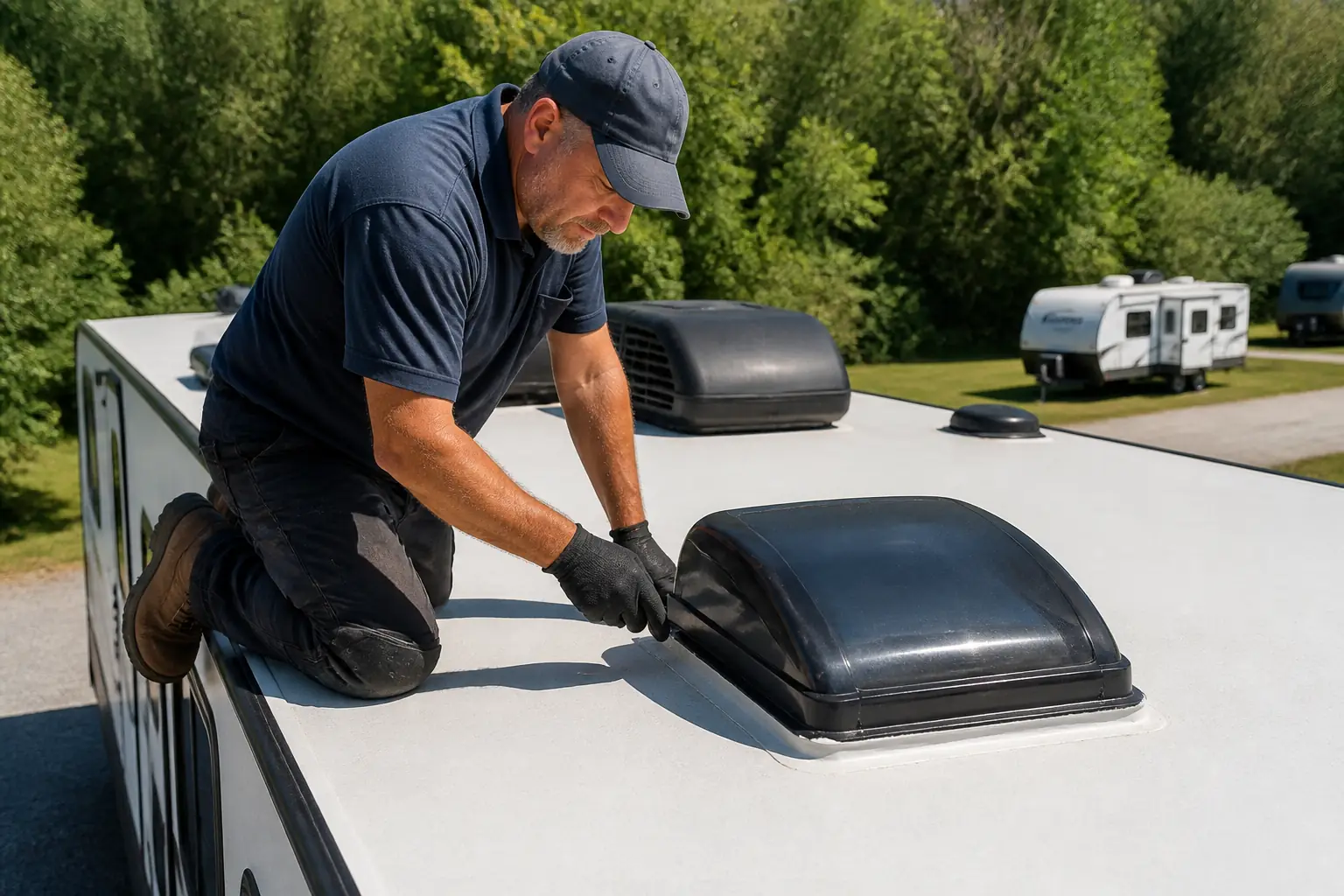
Water intrusion is the leading cause of major RV repairs. Because camper roofs flex during transit and expand under the hot Wilmington sun, roof sealants can dry out, crack, or pull away over time. Inspecting your roof seams regularly prevents costly water damage before it starts.
- Inspect Every 90 Days: Climb up (or use a stable ladder) to check all self-leveling lap sealant around roof vents, skylights, air conditioner units, and edge moldings.
- Look for Warning Signs: Check for hairline cracks, gaps, lifting edges, or sealant that has turned brittle and chalky.
- Spot Seals vs. Full Recapping: Clean the area thoroughly with rubbing alcohol or a mild cleaner before applying fresh Dicor or manufacturer-approved lap sealant over minor gaps. Never use household silicone, as it will not adhere properly to RV roofing membranes (TPO, EPDM, or PVC).
- Check Slide-Out Seals: Wipe down rubber bulb seals and wiper seals with a dedicated RV rubber seal conditioner to keep them pliable and UV-resistant.
2. Coastal NC Seasonal Care: Humidity, Salt Air, & Heat
Camping near Wrightsville Beach, Carolina Beach, or along the Intracoastal Waterway offers incredible views, but salt air and humidity require specific preventative care.
Managing Salt Deposits: Airborne salt settles on metal hardware, slide-out mechanisms, awnings, and your undercarriage. Hose off your exterior after coastal trips, paying special attention to wheel wells, frame rails, and slide-out tracks. Apply a coat of quality RV wax twice a year to protect the gelcoat and fiberglass from salt bonding and oxidation.
Controlling Indoor Moisture: High humidity in eastern North Carolina can create interior condensation, leading to mildew behind cushions and in closets. Run a small dehumidifier or use moisture-absorbing canisters during storage, and leave roof vent covers cracked when appropriate to encourage airflow.

3. RV Battery & Electrical System Care
Your RV battery bank powers everything from slide-outs and tongue jacks to 12V refrigerators and water pumps. Extreme summer heat shortens battery lifespan just as quickly as winter freezing.
- Check Fluid Levels (Flooded Lead-Acid): Inspect water levels in conventional deep-cycle batteries monthly. Top off cells with distilled water only—never tap water.
- Keep Terminals Clean: Inspect terminals for white or greenish corrosion build-up. Clean with a wire brush and a mixture of baking soda and water, then coat with a terminal protector spray.
- Maintain Voltage During Storage: Batteries slowly self-discharge when idle. Store your battery on a smart trickle charger or switch off the battery disconnect switch to prevent complete discharge, which damages cell capacity.
4. RV Maintenance Schedule Checklist
Following a consistent maintenance timeline keeps minor tasks manageable and prevents unexpected breakdowns during family trips. Reference this helpful schedule:
| Frequency | Maintenance Task | Target Area |
|---|---|---|
| Before Every Trip | Check tire pressure (cold), lug nut torque, and signal lights. | Tires & Chassis |
| Monthly | Inspect battery fluid/terminals, run generator under load for 30 mins. | Electrical System |
| Every 3 Months | Inspect roof lap sealant, slide seals, and clean AC filter pads. | Roof, Seals & HVAC |
| Bi-Annually (6 Mos) | Wash & wax exterior, deep clean awning fabric, sanitize freshwater tank. | Exterior & Plumbing |
| Annually | Repack wheel bearings, inspect brakes, service water heater anode rod. | Running Gear & Plumbing |

5. RV Winterization & Off-Season Storage
While coastal North Carolina experiences relatively mild winters compared to northern states, freezing temperatures still occur between December and February. Failing to winterize plumbing lines can cause shattered PEX pipes, broken water lines, and cracked water heater tanks.
- Drain All Water Tanks: Empty the fresh water holding tank, low-point drains, and the water heater tank (ensure water heater power is OFF and water is cool before pulling the drain plug).
- Bypass the Water Heater: Turn the bypass valve on the back of your water heater to avoid wasting RV antifreeze inside the tank.
- Pump RV Antifreeze: Using the water pump intake valve, draw non-toxic pink RV antifreeze through every faucet, shower head, toilet, and outdoor spray port until clear pink liquid flows.
- Tire Care: Park tires on wooden boards or rubber leveling blocks rather than directly on damp bare ground or concrete to preserve rubber compounds during extended storage.
When to Call the Professionals
While routine cleaning, battery top-offs, and seal inspections are simple DIY projects, complex systems require certified professional care. Brake shoe adjustments, wheel bearing repacks, LP gas leak tests, electrical troubleshooting, and major roof restoration are best handled by trained service technicians.
At Rex & Sons RVs in Castle Hayne, NC, our expert service department has served southeastern North Carolina RVers since 1997. Whether you need an annual safety inspection, awning repair, or complex slide-out service, our team is dedicated to keeping your family safe on the open road.
Frequently Asked Questions
How often should I inspect the roof seals on my RV in coastal NC?
We recommend inspecting your RV roof seals at least every 90 days. Intense UV exposure and high humidity in coastal North Carolina cause sealants to expand, dry out, and crack faster than in milder climates.
Does salt air near Wilmington affect my RV?
Yes. Salt air accelerates oxidation on fiberglass and causes corrosion on exposed frame components, slide-out mechanisms, and electric tongue jacks. Frequent washing and bi-annual waxing help protect your camper's exterior finishes.
What is the best way to maintain my RV batteries during storage?
Keep batteries fully charged by using a smart trickle charger or disconnecting them using a battery shut-off switch. For flooded lead-acid batteries, check cell water levels monthly and top off with distilled water.
When should I winterize my RV in eastern North Carolina?
It is best to winterize your RV by late November or early December before overnight temperatures drop below freezing. Even a short freeze can damage uninsulated plumbing lines and pump valves.
Keep Your RV Ready for Every Adventure
Taking care of your camper ensures years of memorable family road trips across North Carolina and beyond. If you need help with annual inspections, brake service, roof sealing, or winterization, trust the family-owned team at Rex & Sons RVs. Call our parts and service team today at (910) 679-6522 or visit our dealership in Castle Hayne, NC. Explore our new and used RV inventory or schedule service online today!