
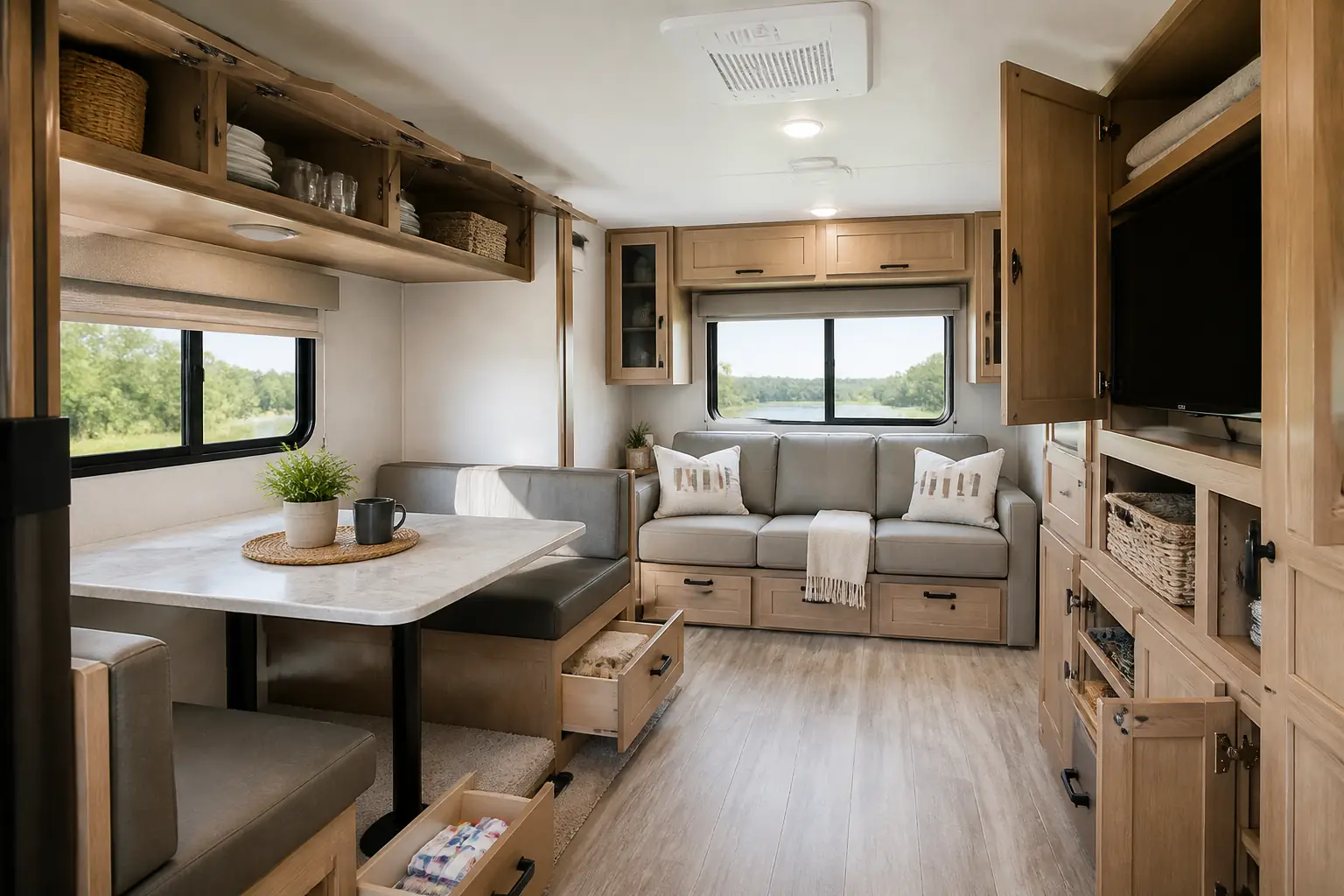
Chapter 15: Understanding RV Storage — Interior, Exterior, Pass-Through & Real-World Capacity
Evaluating an RV's storage capacity requires looking far beyond brochure cubic footage to understand usable layout, accessibility, and gross weight limits. Whether you are shopping for a compact travel trailer or a luxury fifth wheel, mastering storage organization protects both your road-trip comfort and your vehicle's safety on the highway.
At Rex & Sons RVs in Castle Hayne, North Carolina, we have helped coastal NC families prepare for the road since 1997. In this chapter of our 2027 Ultimate RV Buyer’s Guide, we break down every storage zone in a modern recreational vehicle, highlight common packing traps, and give you a practical audit checklist to use during your dealership walkthrough.

Interior Living Storage
Interior storage dictates how tidy and livable your RV feels during extended trips. Standard living room features often include overhead cabinetry above dinettes and sofas, but usable depth and construction matter significantly. Look for full-extension drawer guides and real hardwood cabinet doors rather than thin wrapped pressboard.
- Under-Dinette Benches: Many dinettes offer storage beneath the cushions. Access via hinged tops or pull-out drawer drawers allows quick retrieval of bulky items without removing the seating cushions.
- Multi-Functional Furniture: Theater seating and sofas frequently incorporate center consoles, hidden armrest cubbies, and footrest storage for remotes, throw blankets, and electronics.
- Overhead Storage Cabinets: Deep overhead bins above seating areas provide essential room for games, linens, and light gear, provided they feature sturdy hinges and latches that stay secured while traveling.
Kitchen Storage Solutions
The galley requires specialized storage designed to withstand high vibrations during transit. A well-designed kitchen balances small utensil storage with deep volume for cookware and food stock.
- Pantry Layouts: Look for tall floor-to-ceiling pantries with adjustable shelving or slide-out wire racks to maximize vertical space without losing items in the back.
- Pot and Pan Drawers: Deep lower drawers under cooktops or ovens offer much more functional utility for heavy cookware than shallow cupboards.
- Dedicated Trash Can Recesses: Higher-end floor plans build dedicated cabinet space for a standard kitchen trash bin, keeping walk aisles clear.
Bedroom & Bathroom Storage
Personal storage space determines how easily you can maintain daily routines on the road without living out of suitcases.
- Under-Bed Storage: Lift-up bed platforms equipped with gas struts open up a massive cavern ideal for extra bedding, seasonal clothing, or folding chairs.
- Shirt Closets and Wardrobes: Measure wardrobe hanging depth to ensure full-size coat hangers hang straight without forcing wardrobe doors open.
- Bathroom Linen Closets & Medicine Cabinets: Look for dedicated linen shelving and recessed medicine cabinets so toiletries do not clutter counter surfaces.

Exterior & Pass-Through Storage
Exterior storage handles outdoor living gear, setup tools, and bulk items. Pass-through storage compartments stretch across the entire width of the frame under the front or middle section of the RV.
- Pass-Through Compartment Features: Seek out wide, baggage doors equipped with magnetic catches or durable slam-latch handles. Interior lighting and tough metal floor liners protect against scuffs from outdoor tables and power cords.
- Heated & Insulated Bays: If you plan cold-weather camping, climate-controlled basement compartments keep water hookups and valves from freezing.
- Cargo Carrying Capacity (CCC): Every RV has a factory-certified weight limit. Always subtract the weight of added outdoor gear, filled water tanks, and LP tanks from your CCC to prevent dangerous overloading.
Common Storage Mistakes to Avoid
Avoid these frequent packing and purchasing missteps to keep your RV safe, balanced, and organized:
| Storage Mistake | Impact / Risk | Correct Approach |
|---|---|---|
| Overloading Front Pass-Throughs | Excessive tongue weight that exceeds tow vehicle limits. | Distribute heavy items evenly across axles and check tongue weight. |
| Ignoring Usable Depth vs. Volume | Inability to fit standard plastic storage totes or appliances. | Measure door openings and compartment depth before purchasing gear. |
| Unsecured Heavy Items in Overhead Cabinets | Items shifting in transit, bursting doors open upon arrival. | Store heavy pots/cans low; use non-slip liners and tension rods above. |
| Exceeding Cargo Carrying Capacity (CCC) | Tire blowouts, frame strain, and compromised braking. | Weigh your loaded rig on a certified CAT scale periodically. |
Real-World Storage Audit Checklist
Use this step-by-step checklist when walking through camper models at our dealership:
- [ ] Measure Door Openings: Ensure exterior baggage doors are wider than your standard coolers and camp chairs.
- [ ] Check Latches & Hinges: Verify cabinet doors feature hidden steel hinges and positive catches that won't fly open on rough roads.
- [ ] Inspect Under-Bed Lift Struts: Confirm gas struts hold the bed platform open smoothly without manual effort.
- [ ] Review OCCC Label: Locate the yellow Occupant and Cargo Carrying Capacity sticker inside the doorway to verify real-world payload capacity.
- [ ] Test Drawer Extensions: Ensure drawers slide fully open so you can reach the back corners easily.
Frequently Asked Questions
How much pass-through storage space do I need for family camping?
For a family of four, aim for a pass-through compartment with at least 35 to 50 cubic feet of capacity, featuring wide slam-latch doors that fit bulky camp chairs, grills, and outdoor rugs easily.
What is the difference between dry weight and Cargo Carrying Capacity (CCC)?
Dry weight is the unloaded weight of the RV from the factory without liquids, gear, or options. Cargo Carrying Capacity (CCC) is the maximum weight of gear, water, LP gas, and personal belongings you can safely add to the RV.
How do I stop items from falling out of RV cabinets during travel?
Use spring-loaded tension rods inside overhead cabinets, non-slip shelf liners, and clear plastic bins to hold smaller items securely in place during transit.
Ready to test out RV layouts in person? Visit our friendly team at Rex & Sons RVs in Castle Hayne, NC. Call Sales at (910) 793-2894 or Parts at (910) 679-6522, browse our current new and used RV inventory, or contact us today to schedule a tour!