
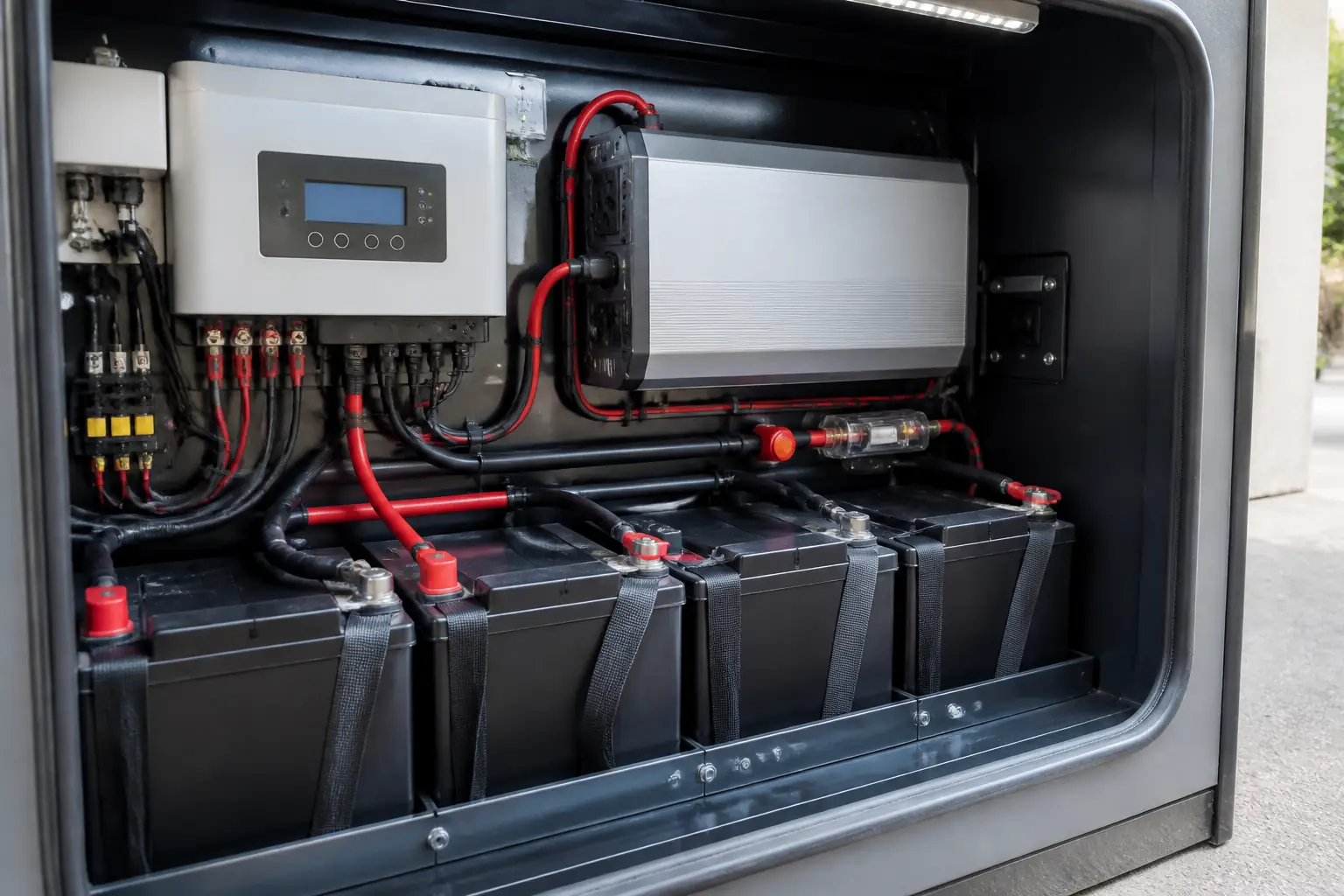
Understanding RV Electrical Systems: 30A vs 50A, Batteries, Converters, Inverters & Solar
Understanding RV electrical systems can feel overwhelming at first, but every RV operates using two distinct power systems working together: a 12-volt Direct Current (DC) system and a 120-volt Alternating Current (AC) system. By learning how these systems interact through shore power, batteries, converters, inverters, and solar setups, you can confidently manage your power needs whether camping full-hookup in Wilmington or dry camping along the North Carolina coast.
At Rex & Sons RVs, our goal is to help you feel entirely comfortable with your coach before you ever head out on your first trip. Let's break down each component of your RV's power grid step by step.
12V DC vs. 120V AC: The Two RV Electrical Systems
Your RV is essentially a rolling house with two separate electrical networks. Understanding which appliances belong to which system prevents blown fuses, tripped breakers, and dead batteries.
| System Type | Primary Power Source | What It Powers | Key Characteristics |
|---|---|---|---|
| 12-Volt DC (Direct Current) | House Battery Bank, Solar, Converter | Interior lights, water pump, furnace fan, RV refrigerator control boards, power awnings, slide-out motors, stereo. | Always available when battery is charged; lower voltage; safe and efficient for continuous low-draw loads. |
| 120-Volt AC (Alternating Current) | Campground Shore Power, Generator, Inverter | Roof air conditioners, microwave, standard wall outlets, residential refrigerator, electric water heater element. | Requires connection to pedestal, generator running, or robust inverter setup; standard household power. |
Shore Power Demystified: 30-Amp vs. 50-Amp Service
When you pull into a campsite and connect to the power pedestal, you will plug into either a 30-amp or 50-amp outlet. The difference between these two connections is significantly larger than the numbers imply.
- 30-Amp Service: Uses a 3-prong plug and supplies 120 volts over a single hot wire. Maximum power capacity is 3,600 watts (30 amps × 120 volts). This is generally sufficient to run one air conditioner along with small electronic devices, but running a microwave and AC simultaneously may trip the campsite breaker.
- 50-Amp Service: Uses a 4-prong plug and supplies two separate 120-volt hot legs delivering 50 amps each. This yields a massive maximum power capacity of 12,000 watts (50 amps × 120 volts × 2 legs). This massive capacity easily powers two or three air conditioners, residential appliances, and high-draw electronics all at once.
You can safely use dogbone adapters (such as a 50A to 30A adapter) to plug your rig into smaller electrical pedestals, but remember that your total available wattage will be limited to the power standard of the outlet you plug into.

RV Power Brains: Converter vs. Inverter
Many new RV owners mix up converters and inverters because both devices change electrical currents. However, they perform exactly opposite functions inside your rig.
| Device | Direction of Power Flow | Primary Purpose |
|---|---|---|
| RV Converter (Charger) | 120V AC → 12V DC | Takes 120V electricity from shore power or generator, steps it down to 12V DC to power lights/pumps, and recharges your house battery bank. Standard equipment on virtually all RVs. |
| RV Inverter | 12V DC → 120V AC | Takes 12V DC power stored in your house batteries and "inverts" it to 120V AC electricity so you can run wall outlets, TVs, or microwaves without shore power. |
Deep-Cycle RV Batteries: Types & Comparison
Your battery bank is the heart of off-grid RV travel. Standard automotive start batteries are designed for short bursts of high cold-cranking amps, whereas RV house batteries are deep-cycle units designed to discharge slowly over many hours.
- Flooded Lead-Acid (FLA): Most economical upfront, but requires regular maintenance (topping off cells with distilled water) and should only be discharged to 50% capacity to prevent permanent damage. Must be stored in vented battery boxes.
- Absorbed Glass Mat (AGM): Sealed, maintenance-free lead-acid batteries that tolerate vibration and extreme weather better than FLA. Still subject to a 50% recommended depth-of-discharge limit.
- Lithium Iron Phosphate (LiFePO4): Premium technology offering fast charging, zero maintenance, extremely lightweight design, and safely allows 80% to 100% usable depth-of-discharge. Although higher in initial cost, lithium provides 3,000 to 5,000 recharge cycles—outlasting lead-acid options by many years.
Solar Power Basics for RVers
Solar energy is an efficient, quiet method for maintaining your RV house batteries without noisy generators. A complete RV solar system consists of three main elements:
- Solar Panels: Capture sunlight and convert it into low-voltage DC electricity.
- Solar Charge Controller (PWM or MPPT): Regulates incoming voltage from panels to protect your battery bank from overcharging. MPPT controllers are up to 30% more efficient than basic PWM controllers.
- Battery Bank & Inverter: Stores harvested energy for 12V operation or inverts it to 120V for residential outlets.
Frequently Asked Questions
Can I plug a 50-amp RV into a 30-amp campground outlet with an adapter?
Yes. You can use a 50-amp to 30-amp dogbone adapter to plug into a 30-amp pedestal. However, your total power capacity drops from 12,000 watts down to 3,600 watts, meaning you should run only one air conditioner and manage high-draw appliances carefully.
What is the difference between an RV converter and an RV inverter?
A converter changes 120V AC electricity from shore power into 12V DC power to charge batteries and run 12V items. An inverter does the opposite: it turns 12V DC battery power into 120V AC electricity to run standard household appliances while unplugged.
Will solar power run my RV air conditioner?
Running a roof AC unit strictly off solar requires a very large solar panel array (typically 800W+), a large lithium battery bank (400Ah+), and a high-capacity soft-start inverter. For most RVers, solar is primarily used to keep batteries charged for lights, pumps, refrigeration, and electronics.
How do I keep my RV batteries from dying while stored in Castle Hayne winter/off-season?
Disconnect the battery ground cable or switch off the master disconnect switch to prevent parasitic drains from safety detectors. Keep the batteries fully charged before storage and consider plugging into a trickle charger or maintaining panel output every few weeks.
Have questions about upgrading to lithium, adding solar panels, or checking your rig's electrical health? The family and service team at Rex & Sons RVs in Castle Hayne are always here to keep your coastal NC adventures powered up safely. Call our service team at (910) 679-6522, reach our sales experts at (910) 793-2894, or visit our inventory page to find your next adventure-ready RV today.