
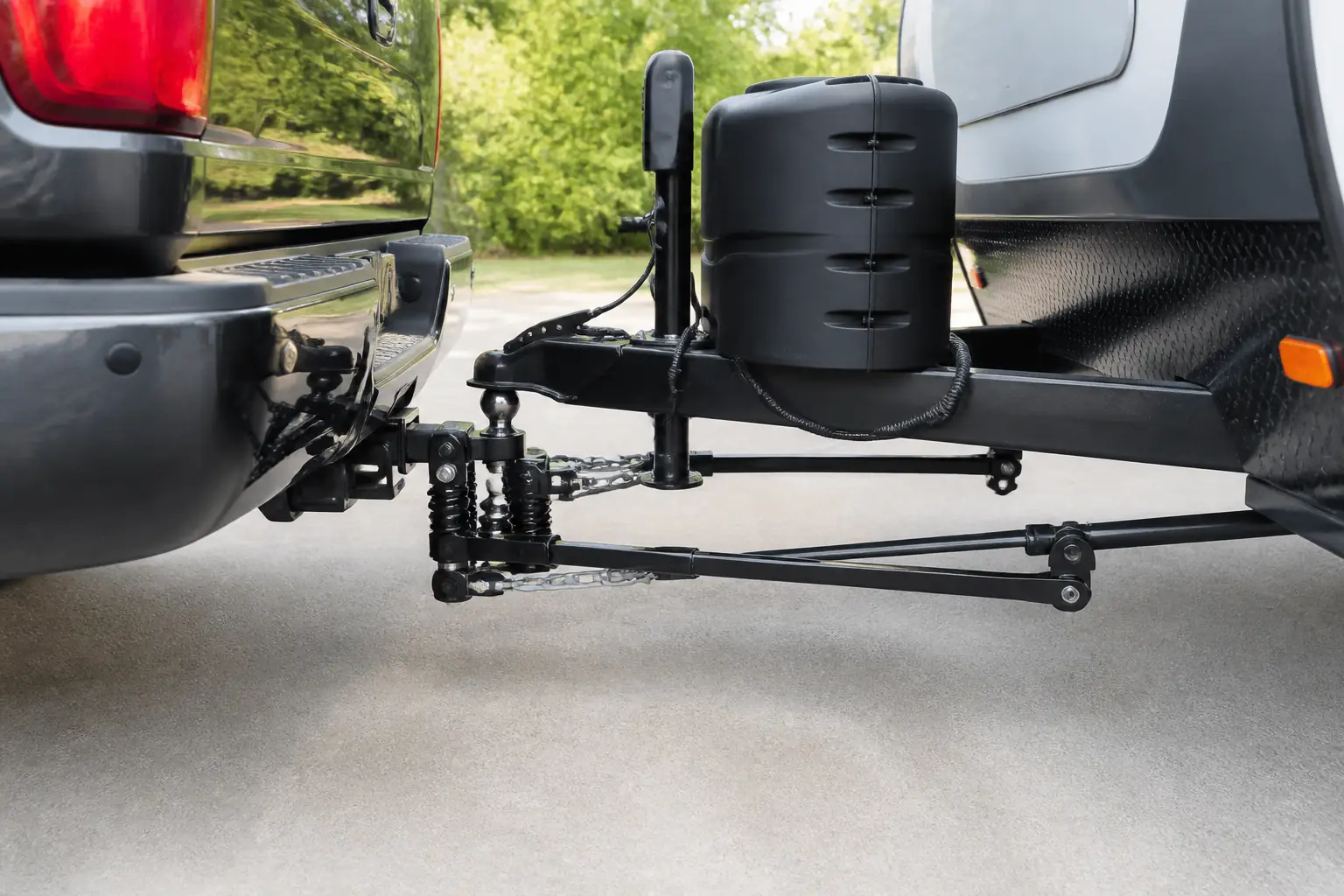
RV Hitch Safety and Setup: Chapter 17 Guide
Proper RV hitch safety and setup is the foundation of every safe travel trailer journey. Ensuring your tow vehicle and trailer are linked with the correct hitching system prevents trailer sway, improves steering control, and eliminates dangerous axle overloading.
Whether you are towing a lightweight micro-camper or a large travel trailer, mastering the principles of hitch classification, weight distribution, sway control, and proper coupling procedures ensures a secure ride for your family and equipment.
Understanding RV Hitch Classes and Weight Ratings
Before selecting a hitch, you must understand your vehicle's towing capacity and the weight ratings of both your trailer and hitch system. Hitches are categorized by classes ranging from Class I to Class V, with most travel trailers requiring a Class III, Class IV, or Class V receiver hitch.
- Gross Trailer Weight Rating (GTWR): The maximum total weight of your trailer when fully loaded with cargo, water, and propane.
- Tongue Weight (TW): The downward force exerted by the trailer tongue onto the hitch ball, ideally between 10% and 15% of the total loaded trailer weight.
- Receiver Hitch Rating: The maximum weight capacity stamped directly onto your tow vehicle's receiver hitch frame.

Comparing Towing Hitch Systems
Different RV designs require specific hitch setups. The table below compares common hitch configurations used for towing recreational vehicles:
| Hitch Type | Typical GTWR Range | Tongue Weight Range | Best Suited For |
|---|---|---|---|
| Standard Ball Mount (Class III/IV) | Up to 5,000 - 10,000 lbs | 500 - 1,000 lbs | Small utility trailers, popup campers, micro-trailers |
| Weight Distribution Hitch (WDH) | 5,000 - 16,000+ lbs | 500 - 1,600+ lbs | Mid to large travel trailers towed by SUVs or trucks |
| Fifth-Wheel Hitch | 12,000 - 24,000+ lbs | 2,000 - 4,500+ lbs | Large fifth-wheel trailers mounted in truck beds |
| Gooseneck Hitch | 15,000 - 30,000 lbs | 2,500 - 5,000 lbs | Heavy-duty commercial and custom RV towables |
Weight Distribution Hitches and Sway Control Systems
When a heavy trailer is placed on a standard ball mount, it creates a leverage effect that pushes down on the tow vehicle's rear axle while lifting the front axle. This causes dangerous headlight aiming issues, reduced steering response, and extended braking distances. A Weight Distribution Hitch (WDH) uses spring bars to leverage and redistribute that tongue weight across both tow vehicle axles and the trailer axle.
Trailer sway is caused by crosswinds, passing semi-trucks, or sudden steering maneuvers. Combining weight distribution with built-in or add-on sway control keeps the trailer tracking directly behind the tow vehicle.
- Friction Sway Control: Uses a telescoping arm with internal friction pads to resist side-to-side movement. Ideal for lighter trailers.
- Integrated Cam-Style / 4-Point Sway Control: Uses spring bar tension and specialized bracket geometry to actively resist and correct sway forces. Recommended for mid-size to large travel trailers.
Step-by-Step RV Hitch Setup and Hookup Procedure
Follow this checklist every time you prepare to couple your travel trailer to your tow vehicle:
- Level and Chock: Ensure the trailer wheel chocks are securely placed on both sides before beginning hitch adjustment.
- Set Ball Height: Adjust your hitch shank height so the hitch ball sits approximately 1 to 2 inches higher than the trailer coupler when the trailer is resting completely level.
- Back Up and Lower Coupler: Align your tow vehicle ball under the trailer coupler and lower the trailer jack until the coupler seats fully over the ball.
- Lock Coupler Latch: Close the coupler latch mechanism and insert the safety locking pin or padlock.
- Engage Weight Distribution Bars: Raise the trailer tongue and truck rear slightly using the tongue jack to reduce tension, then attach the spring bars according to manufacturer torque specs. Lower the jack fully.
- Connect Safety Chains: Cross safety chains beneath the trailer coupler in an 'X' pattern to catch the tongue if uncoupled. Attach chains to the receiver frame loop.
- Attach Breakaway Cable: Connect the emergency electric brake breakaway cable directly to the tow vehicle frame, ensuring it is unhindered and shorter than the safety chains.
- Plug in 7-Pin Harness: Insert the 7-way electrical connector into the vehicle socket and test running lights, brake lights, turn signals, and the electric brake controller operation.

Safety Inspections and Hitch Maintenance
Routine hitch maintenance ensures long-term reliability and safe highway travel. Perform these visual and mechanical checks regularly:
- Inspect hitch welds, receiver bolts, and mounting hardware for fatigue or rust.
- Apply hitch ball grease to reduce friction and wear on the coupler joint.
- Check spring bar bracket pins and clips for wear before every trip.
- Verify tire pressures on both the tow vehicle and trailer prior to departure.
Frequently Asked Questions
How do I know if I need a weight distribution hitch?
If your loaded travel trailer weighs more than 50 percent of your tow vehicle's weight, or exceeds 3,500 lbs GTWR, a weight distribution hitch is strongly recommended to maintain proper steering and braking performance.
Why must safety chains be crossed in an X pattern under the coupler?
Crossing the safety chains creates a cradling net under the coupler. If the trailer coupler detaches from the hitch ball during transport, the crossed chains will catch the tongue before it hits the roadway.
How tight should weight distribution spring bars be set?
Spring bars should be adjusted until the front wheel well height of your tow vehicle returns as close as possible to its unloaded stock height, typically within 1/2 inch of normal resting measurement.
Can I back up my trailer with friction sway control attached?
Separate add-on friction sway bars should be loosened or removed before sharp backing maneuvers to prevent bending or damaging the friction slider bar. Integrated 4-point sway control hitches generally allow backing up without removal.
Get Expert Towing Support at Rex & Sons RVs
Ensuring proper RV hitch safety and setup gives you total confidence on the open road. At Rex & Sons RVs in Castle Hayne, NC, our factory-trained service technicians are here to help you select, install, and adjust the perfect weight distribution and sway control system for your rig. Contact our sales department at (910) 793-2894 or our parts and service department at (910) 679-6522, or visit us online to browse our latest inventory and towing accessories.