
Chapter 20: Understanding RV Climate Systems
Maintaining ideal interior comfort and air quality in an RV requires understanding how air conditioning, heating, insulation, and ventilation work together as integrated RV Climate Systems. Because recreational vehicles feature thin walls, high sun exposure, and compact living spaces, managing thermal transfer and humidity is essential for enjoyable multi-season camping.
Air Conditioning Systems
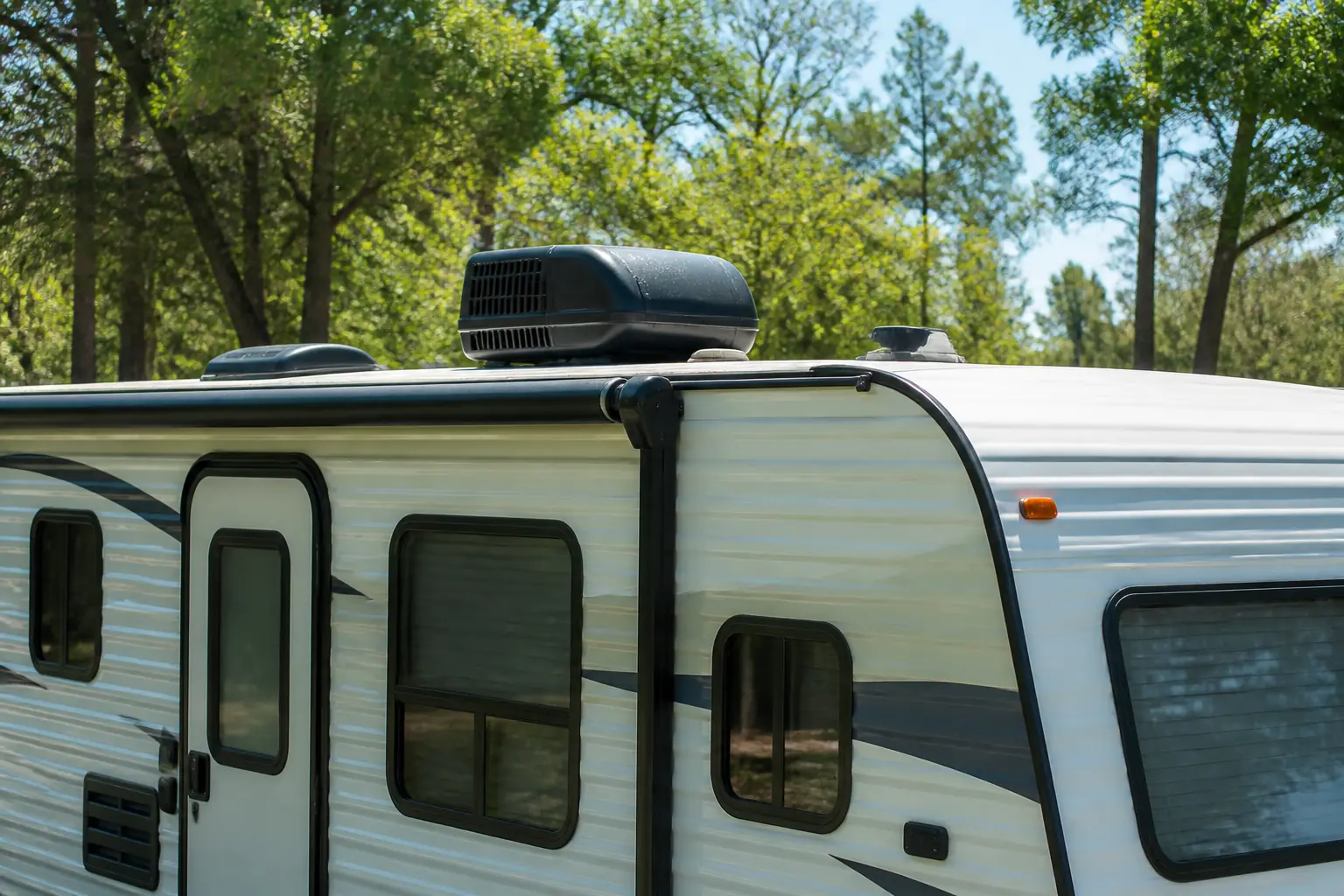
Rooftop RV air conditioners are the standard climate control solution for modern travel trailers, fifth wheels, and motorhomes. Most RV air conditioners operate on 120V AC shore power or generator power and are rated by British Thermal Units (BTUs), typically ranging from 13,500 BTU to 15,000 BTU per unit. Larger rigs often feature dual or triple AC configurations to cool expanded floor plans.
Air conditioning systems generally fall into two layout categories:
- Ducted AC Systems: Cool air travels through ceiling channels and blows evenly into distinct rooms, reducing direct blower noise and balancing temperatures throughout the coach.
- Non-Ducted (Direct Discharge) Systems: Cold air dumps directly from the ceiling unit grill into the main cabin, providing rapid localized cooling for smaller campers.
Additionally, some high-efficiency RV air conditioners include heat strips or reversible heat pumps to provide light electrical heating during mild spring and autumn mornings without consuming LP gas.

Understanding Real-World AC Performance
A common misconception is that an RV air conditioner functions like a residential home unit. In reality, RV AC performance is limited by ambient outdoor temperatures and physical surface exposure. An RV air conditioner is engineered to achieve a maximum temperature drop (Delta T) of 15 to 20 degrees Fahrenheit between incoming return air and outgoing supply air.
When camping in extreme coastal North Carolina heat—where outdoor temperatures reach 95°F with high humidity—an interior target temperature of 75°F represents peak efficiency. Expecting an RV AC to pull a sun-exposed trailer down to 65°F in midsummer exceeds the physical limits of the equipment.
| System Configuration | BTU Rating | Recommended Rig Length | Best Suited For |
|---|---|---|---|
| Single Direct-Discharge AC | 13,500 BTU | Under 24 Feet | Couples, Pop-ups, Small Travel Trailers |
| Single Ducted AC | 15,000 BTU | 24 - 30 Feet | Mid-size Travel Trailers & Small Fifth Wheels |
| Dual Ducted AC (50-Amp) | 28,500 - 30,000 BTU Total | 30 - 40+ Feet | Large Fifth Wheels & Full-Timer Floorplans |
RV Heating
Keeping your RV warm requires a blend of primary propane heating and supplemental electric options depending on ambient outdoor temperatures:
- Propane Forced-Air Furnaces: The standard primary heating source in most RVs. Driven by 12V DC battery power to operate the blower fan and LP gas to create burner heat, forced-air furnaces channel hot air beneath floor registers and, in four-season coaches, direct warmth into the underbelly to protect holding tanks.
- Electric Fireplaces & Space Heaters: Auxiliary 1,500-watt electric heaters operate on 120V shore power and offset propane consumption during mild frost conditions down to 40°F.
- Hydronic Heating Systems: Found in premium diesel motorhomes and luxury fifth wheels, hydronic systems circulate heated glycol solution through radiant exchangers for whisper-quiet, residential-style heat and continuous hot water.
Ventilation & Moisture Control
Effective RV moisture control is just as critical as temperature regulation. Human respiration, cooking, and hot showers generate several quarts of water vapor inside an RV daily. Without proper airflow, this vapor condenses on cold window frames, walls, and inside unventilated cabinetry, eventually leading to mold growth and structural decay.
To maintain balanced humidity during multi-season camping, utilize high-powered roof exhaust vents (such as Maxxair or Fantastic Vent fans) to pull ambient air through low intake windows. Operating exhaust fans while cooking or showering prevents ambient humidity spikes. In humid coastal environments like Wilmington, running a dedicated portable dehumidifier inside the camper is the most reliable way to maintain indoor relative humidity below 50%.

Insulation Ratings
An RV's thermal envelope determines how effectively it holds internal temperatures. Manufacturers express thermal performance through R-values, which measure resistance to heat flow. Higher R-values indicate greater insulating capacity.
- Rigid Foam Block Insulation: Commonly laminated inside aluminum-framed fiberglass sidewalls, offering clean insulation around R-7 to R-9 without settling over time.
- Fiberglass Batt Insulation: Often layered in roof structures and floors, yielding higher R-values (R-11 to R-14) but vulnerable to performance loss if exposed to dampness.
- Reflective Foil Barriers: Radiant barriers lined inside roofs and underbellies to reflect solar radiation in summer and interior heat radiant back in winter.
- Thermal Package Upgrades: True four-season package setups feature fully enclosed, insulated, and heated underbellies, radiant thermal foil layers, enclosed termination valves, and dual-pane windows.
Common RV Climate Mistakes to Avoid
- Blocking return air intakes or ceiling discharge vents with storage boxes, hanging clothes, or misplaced reflectix inserts.
- Failing to clean washable return air filters on rooftop AC units every few weeks during high-use summer seasons.
- Sealing an RV completely airtight during winter without running exhaust fans, locking high interior humidity inside the vehicle.
- Relying exclusively on portable electric space heaters in below-freezing temperatures, which leaves underbelly plumbing unheated and prone to freezing.
- Expecting a single 13,500 BTU rooftop unit to cool a dark-colored 35-foot travel trailer parked in direct midday summer sun.
Rex & Sons Climate Advantage
At Rex & Sons RVs, we know that coastal North Carolina weather demands dependable climate control. For over 27 years, our family dealership in Castle Hayne has helped campers choose and maintain RVs equipped to handle sweltering summer humidity and chilly winter nights alike. Whether you need a four-season package with heated tanks or an upgraded dual-AC setup, our team tests and inspects every climate system so you stay comfortable wherever your adventures lead.
Frequently Asked Questions
How many BTU air conditioners do I need for my RV?
RVs under 28 feet generally perform well with a single 13,500 or 15,000 BTU air conditioner. Campers over 30 feet or those traveling extensively through hot southern climates benefit significantly from a 50-amp electrical service paired with dual 13,500 or 15,000 BTU rooftop units.
Why is my RV AC running continuously without cooling below 78 degrees?
RV air conditioners are designed to lower the interior temperature by 15 to 20 degrees relative to ambient outdoor air. In direct 95°F sunshine, an interior temp of 75°F to 78°F represents optimal performance. Parking in shade and using window shades reduces solar heat gain.
How do I stop condensation from forming inside my RV during winter?
Crack a roof vent, run a powered ceiling exhaust fan when cooking or bathing, keep cabinet doors open slightly to circulate warm air, and use an electric dehumidifier to maintain relative humidity under 50 percent.
Ready to upgrade your camping comfort or service your RV climate control systems? Contact the experts at Rex & Sons RVs today at (910) 793-2894 for sales or (910) 679-6522 for parts and service. Explore our inventory online or visit our Castle Hayne dealership to find your perfect multi-season RV!