RV Construction Materials Guide: Chapter 8
Evaluating an RV's build quality requires looking beneath the decorative graphics and interior finishes to examine its structural skeleton, wall backing, roof membrane, and slide-out mechanics. Understanding how an RV is built helps you choose a unit that offers long-term durability, proper thermal insulation, and minimal maintenance costs over your years of ownership.
In Chapter 8 of our RV Buyer's Guide, the team at Rex & Sons RVs breaks down the major engineering choices manufacturers make—from traditional wood framing to modern aluminum superstructures, and composite wall backings to heavy-duty slide mechanisms.

Wood vs. Aluminum Framing
The structural skeleton of a travel trailer or motorhome supports the entire shell and endures thousands of miles of road vibration. Manufacturers primarily use either traditional wood framing or lightweight aluminum tubing.
Wood Framing
Wood framing is the traditional construction standard for entry-level travel trailers and conventional stick-and-tin RVs. Modern builders use kiln-dried lumber, often reinforced with metal corner brackets.
- Advantages: Lower manufacturing cost, easy to repair, excellent natural insulating properties, and flexibility under minor stress.
- Considerations: Heavier overall weight, vulnerable to rot and mold if moisture penetrates the exterior shell, and susceptible to warping over time.
Aluminum Framing
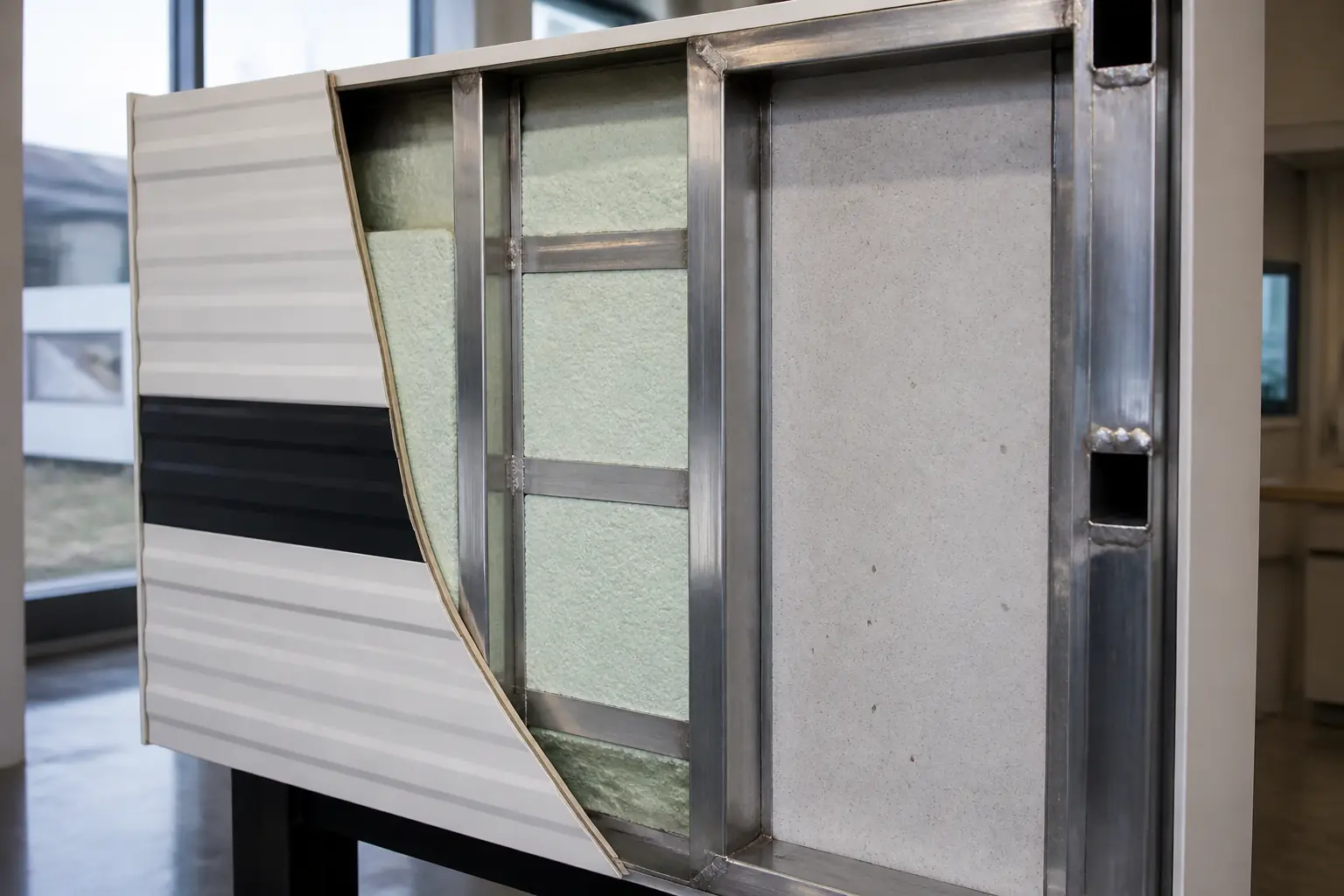
Aluminum framing utilizes welded or mechanical-fastener tubular aluminum framing inside the walls, roof, and floor structures. It is standard on most mid-to-high-tier travel trailers, fifth wheels, and motorhomes.
- Advantages: Significantly lighter weight, impervious to rot and moisture damage, structural longevity, and higher strength-to-weight ratio.
- Considerations: Higher initial purchase price, transfers heat and cold more readily (requiring proper insulation barriers), and requires specialized welding skills for structural repairs.
Wall Substrates: Azdel Composite vs. Luan Wood
Laminated fiberglass sidewalls require an inner substrate layer to bond the exterior fiberglass shell to the interior wall panel. The choice of substrate directly impacts the wall's moisture resistance and durability.
Luan Wood Backing
Luan (or Lauan) is a thin hardwood plywood product used for decades as standard backing in laminated RV sidewalls.
- Advantages: Cost-effective, rigid, and provides a smooth surface for outer fiberglass bonding.
- Considerations: Absorbs water rapidly during leaks, leading to wall delamination, bubbling, mold, and rot.
Azdel Onboard Composite
Azdel is a synthetic blend of polypropylene and fiberglass manufactured without wood products, rapidly replacing Luan in quality RV construction.
- Advantages: 100% moisture resistant (will not rot, delaminate, or grow mold), 50% lighter than Luan, offers 2x the thermal insulation value (R-value), and dampens exterior road noise.
- Considerations: Higher manufacturing component cost, which can slightly increase vehicle retail price.
Construction & Substrate Comparison
| Feature | Wood / Luan Construction | Aluminum / Azdel Construction |
|---|---|---|
| Rot & Water Damage Risk | High (Wood can rot or delaminate) | Minimal (Impervious to moisture rot) |
| Structural Weight | Heavier | Lighter weight |
| Thermal Insulation | Standard (Lower R-Value substrate) | Enhanced (Azdel provides higher R-Value) |
| Long-Term Durability | Requires vigilant seal maintenance | Resistant to structural decay |
| Initial Price Point | Budget-friendly | Mid to Premium investment |

RV Roof Types & Materials
An RV roof must withstand severe weather, UV exposure, and branch impacts while maintaining a watertight seal. Here is how common roofing materials compare:
TPO (Thermoplastic Olefin)
A flexible rubber/plastic hybrid membrane featuring a textured or glossy bright-white surface.
- Advantages: Highly tear-resistant, UV resistant, energy-efficient reflecting heat, and low maintenance.
- Considerations: Requires specific cleaner formulations and regular inspection of lap sealants.
EPDM (Ethylene Propylene Diene Monomer)
A synthetic rubber material, traditionally smooth, used in many towable and motorized units.
- Advantages: Proven track record, durable, and readily repairable with sealant patches.
- Considerations: Can cause chalky white run-off lines on sidewalls over time if unwashed.
PVC (Polyvinyl Chloride)
A durable, commercial-grade thermoplastic membrane welded at the seams.
- Advantages: Exceptional chemical and puncture resistance, low maintenance, bright white reflectance.
- Considerations: Higher cost, slightly stiffer material requiring precise installation.
Fiberglass & Aluminum Roofs
Hard-shell roofs made from solid fiberglass sheets or seamless aluminum panels.
- Advantages: Maximum impact resistance against trees/hail, easy walkability, and sleek finish.
- Considerations: Adds overall vehicle weight, higher cost, and higher noise level during heavy rain (aluminum).
RV Slide-Out Systems Explained
Slide-out rooms expand interior living space when parked. Understanding the mechanism behind your slide room aids in operating and maintaining it correctly.
Through-Frame Rack-and-Pinion
A heavy-duty system using gear tracks welded beneath the chassis floor to extend large main-living slides.
- Advantages: Extremely robust, reliable, and capable of moving heavy slide rooms (kitchens/sofas).
- Considerations: Adds chassis weight and requires underneath clearance space.
Hydraulic Slide Systems
Uses fluid pressure pumps to push and pull heavy slide rooms rapidly and smoothly.
- Advantages: Smooth operation, high force capability for multiple large slides, operates quickly.
- Considerations: Requires fluid level maintenance and hydraulic lines inspection.
Cable-Driven Systems
Uses a network of steel cables and pulleys attached to an electric motor to pull the room in and out.
- Advantages: Lightweight, compact motor footprint, even seal pressure around four corners.
- Considerations: Cable tension must be periodically inspected and adjusted.
Schwintek / In-Wall Electric Systems
Uses dual electric motors mounted inside the wall framing driving worm gears along exterior side tracks.
- Advantages: Compact, light, eliminates under-floor hardware, ideal for bedroom or shallow slides.
- Considerations: Requires exact alignment; sync procedure must be followed when extending/retracting.
Frequently Asked Questions
Is Azdel really worth the extra money in an RV?
Yes. Azdel composite panels do not absorb water, eliminating the risk of delamination and wood rot in sidewalls. It also provides better insulation and soundproofing while reducing tow weight.
How often should I inspect my RV roof seals?
You should inspect roof seams, sealant beads, vents, and roof fixtures at least twice a year (every 90 to 180 days) and repair any cracked or peeling lap sealant immediately to prevent leaks.
Can I walk on my RV roof?
It depends on the construction. Most modern travel trailers and fifth wheels with 3/8-inch roof decking are fully walkable. Check your owner's manual or consult our service team at Rex & Sons RVs before walking on your unit's roof.
What is the most durable slide-out system for heavy rooms?
Through-frame rack-and-pinion and hydraulic systems offer the highest load capacity, making them ideal for heavy slide-out rooms containing appliances, entertainment centers, or residential furniture.
Find Your Built-to-Last RV at Rex & Sons RVs
Selecting the right construction materials ensures your RV remains safe, comfortable, and valuable for years of family adventures. Have questions about specific framing methods, Azdel models, or slide mechanisms? Visit Rex & Sons RVs in Castle Hayne, NC, or speak with our experienced team today at (910) 793-2894. Explore our full inventory online to compare construction specs on top models from Forest River, East to West, InTech RV, and Winnebago.