used RV inspection checklist: Chapter 7 of the RV Buyer's Guide
Inspecting a used RV thoroughly before purchase is the single most important step you can take to avoid costly repairs and hidden structural damage. By following a structured used RV inspection checklist, you can systematically evaluate the roof, plumbing, electrical, and mechanical components to make sure your investment is safe, functional, and ready for the road.
Whether you are evaluating a travel trailer, motorhome, or fifth wheel from a private seller or a dealership, taking the time to inspect these critical systems will give you total peace of mind. In Chapter 7 of our RV Buyer's Guide, the team at Rex & Sons RVs breaks down the 10 vital inspection areas, critical red flags, and how our Certified Pre-Owned inspection process protects buyers in coastal North Carolina and beyond.

The 10 Most Important Areas to Inspect in a Used RV
When walking through a pre-owned recreational vehicle, follow this step-by-step checklist to evaluate the RV's true condition from top to bottom.
1. Roof Membrane and Lap Sealant
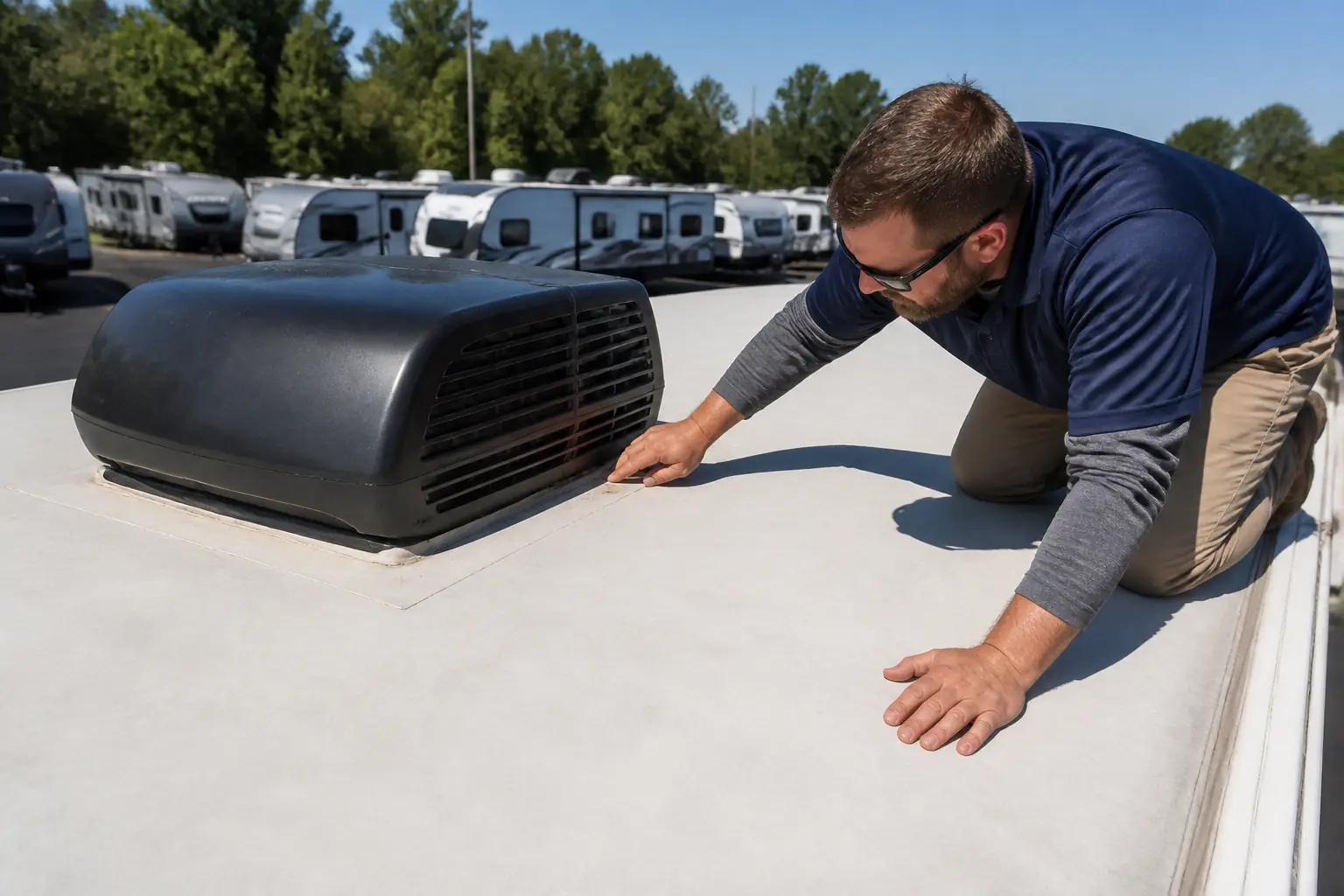
The roof is an RV's first line of defense against the elements. Inspect rubber (TPO/EDPM) or fiberglass roofs for punctures, tears, cracking, or thin spots. Check every seam around vents, skylights, AC units, and edge molding to ensure the lap sealant is pliable and intact without gaps or peeling.
2. Sidewalls and Exterior Seals
Look along the length of the exterior walls for signs of delamination—a wavy appearance or bubbling where the outer fiberglass separates from the inner substrate due to moisture. Inspect corner beads, window framing, and door seals for missing caulk or dry rot.
3. Slide-Out Systems and Weather Seals
Extend and retract all slide-outs fully. Listen for grinding, popping, or laboring motors. Examine top, side, and bottom wiper seals for tears or stiffness, and inspect the slide roof for standing water or seam deterioration.
4. Plumbing System and Water Lines
Hook the RV up to fresh water or pressurize the system using the onboard pump. Check every faucet, shower head, and toilet for leaks, cracks, and adequate pressure. Inspect the water heater, holding tanks (fresh, grey, and black), and drain valves for drips or crack damage caused by improper winterization.
5. Electrical Systems (12V DC and 120V AC)
Test the 12-volt battery system and verify that all interior lights, water pump switches, and vent fans operate smoothly. Next, plug into 30-amp or 50-amp shore power to test all 120-volt wall outlets, microwave, household appliances, and the power converter/charger.
6. Heating, Air Conditioning, and Ventilation
Turn on the rooftop air conditioner and verify it blows cold air within a few minutes. Fire up the LP furnace and confirm hot air flows from all floor/ceiling vents. Test thermostat controls and ceiling exhaust fans for quiet, steady operation.
7. LP Gas System and Appliances
Inspect propane tanks, regulators, and hoses for aging or corrosion. Turn on the gas range burners and test the refrigerator on gas mode. A proper leak-down pressure test on the LP lines should ideally be completed by a certified technician.
8. Tires, Wheels, and Suspension
Check the date code on all tires (even those with good tread depth should generally be replaced after 5–7 years due to sidewall aging). Inspect wheel bearings, leaf springs, axle alignment, and brake pads for signs of excessive rust or wear.
9. Interior Flooring and Subfloor Integrity
Walk slowly throughout the entire interior, paying extra attention around the toilet, shower, kitchen sink, slide-outs, and under windows. Feel for soft spots or spongy subflooring, which almost always indicates long-term water intrusion.
10. Frame, Underbelly, and Hitching Equipment
Crawl beneath the unit to inspect the main frame rails for heavy corrosion, cracks, or weld fractures. If the unit features an enclosed underbelly, check that the protective barrier is intact and not sagging from leaked fluid.
Used RV Red Flags: Minor Fixes vs. Major Dealbreakers
Not every cosmetic flaw should keep you from buying a pre-owned camper. However, certain structural or system failures carry severe repair costs that quickly turn a great bargain into a money pit. Use the table below to distinguish between minor maintenance items and major red flags.
| Inspection Area | Minor Wear (Acceptable / Easily Fixed) | Major Red Flag (Costly / Dealbreaker) |
|---|---|---|
| Roof & Sealing | Dirty roof membrane; slightly weathered caulk needing touch-up sealant. | Punctured membrane; cracked lap sealant with visible water entry or soft roof deck. |
| Exterior Walls | Faded graphics; light road grime or small gelcoat scuffs. | Exterior delamination bubbles; widespread soft spots on sidewalls. |
| Interior Floors | Worn linoleum surface; loose trim or carpet staining. | Spongy subfloors around slides, doors, or bathroom fixtures indicating rotted wood. |
| Plumbing & Water | Dripping faucet washer; loose low-point drain cap. | Busted water heater tank; cracked holding tanks; widespread freezing line breaks. |
| Slide-Outs | Squeaky slide mechanism requiring dry silicone spray lubrication. | Misaligned slide box binding on frame; rotted slide room subfloor or broken motor gear. |

The Rex & Sons Certified Pre-Owned Advantage
Buying from a private seller often leaves you taking on all the risk. At Rex & Sons RVs in Castle Hayne, NC, we remove the guesswork from shopping for used travel trailers, motorhomes, and fifth wheels. Every pre-owned unit on our lot undergoes a comprehensive inspection by factory-trained technicians before it is offered for sale.
Our pre-delivery inspection covers LP gas pressure checks, full plumbing pressure tests, appliance performance verification, seal restoration, and road safety system checks. We ensure your pre-owned RV is clean, safe, fully operational, and ready for camping the day you hitch up.
Frequently Asked Questions
How can I tell if a used RV has hidden water damage?
Look for discoloration on interior ceilings and wallboards, musty odors inside cabinets, soft spots in the subfloor, and exterior wall delamination. Always check inside overhead cabinets along exterior seams for dampness or staining.
How old is too old for used RV tires?
RV tires usually age out before their tread wears down. Tires older than 5 to 7 years should be replaced regardless of tread depth due to rubber degradation from UV exposure and standing weight.
Can I hire an independent inspector to check a used RV?
Yes, hiring a certified National RV Inspectors Association (NRVIA) inspector is a great option, especially when buying privately. Reputable RV dealerships welcome independent inspections or provide their own detailed pre-owned multi-point inspection reports.
What is the difference between minor seam maintenance and major delamination?
Minor seam maintenance involves applying fresh RV lap sealant to dry, intact seams. Delamination occurs after water penetrates those seams and rots the wood substrate, causing the outer fiberglass layer to warp and separate, which requires extensive wall rebuilds.
Ready to find a reliable pre-owned RV that has already passed a rigorous multi-point inspection? Explore our latest inventory online or visit the team at Rex & Sons RVs in Castle Hayne, NC. Call our sales specialists today at (910) 793-2894 or visit our pre-owned inventory page to browse fully inspected models ready for your next adventure.